Sequence the work
Route each product through the steps it actually requires, from cutting and assembly to quality and packing.
MANUFACTURING & WORKFLOWS
ORCA connects work orders, bills of materials, production steps, and inventory so your team always knows what to build, what it needs, and what happens next.
PRODUCTION CONTROL
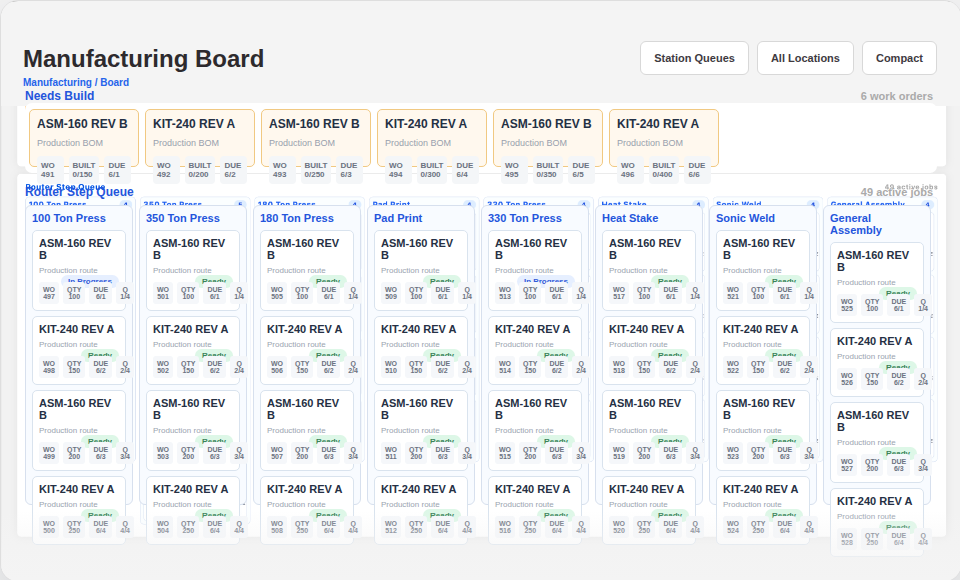
Production should not disappear between a sales order, a spreadsheet, and the warehouse. ORCA keeps demand, materials, labor steps, and finished inventory connected to the same work order.
Create work from demand, forecasts, or a production schedule.
See the components, quantities, shortages, and substitutions behind the build.
Move work through stations, router steps, approvals, and quality checks.
Consume materials, receive finished goods, and preserve the production history.
BILLS OF MATERIALS
Every work order starts with the right components and quantities. ORCA gives purchasing, inventory, and production the same view of what the build requires.
Connect demand to the build. Create production requirements from orders, forecasts, kits, assemblies, or custom configurations.
See shortages before work starts. Compare required material with inventory already available, committed, or inbound.
Keep revision and lot history. Preserve what was planned, what was actually consumed, and what entered finished inventory.
ROUTING & FLOOR EXECUTION
Operators see the work ready for their station. Managers see what is active, waiting, blocked, or complete across the whole route.
Route each product through the steps it actually requires, from cutting and assembly to quality and packing.
Keep downstream work waiting until the required material, approval, or prior step is complete.
Return failed work to the right step without losing the reason, ownership, or production history.
Understand where work is accumulating and which orders need attention before a delay reaches the customer.
ADAPTABLE WORKFLOWS
Once the manufacturing foundation is in place, ORCA can adapt the steps that make your operation different while keeping them inside the same queues, records, and inventory controls.
Talk through your production processDifferent steps, stations, instructions, and lead times by product or revision.
Artwork approval, first-article inspection, signoff, photos, and required checks.
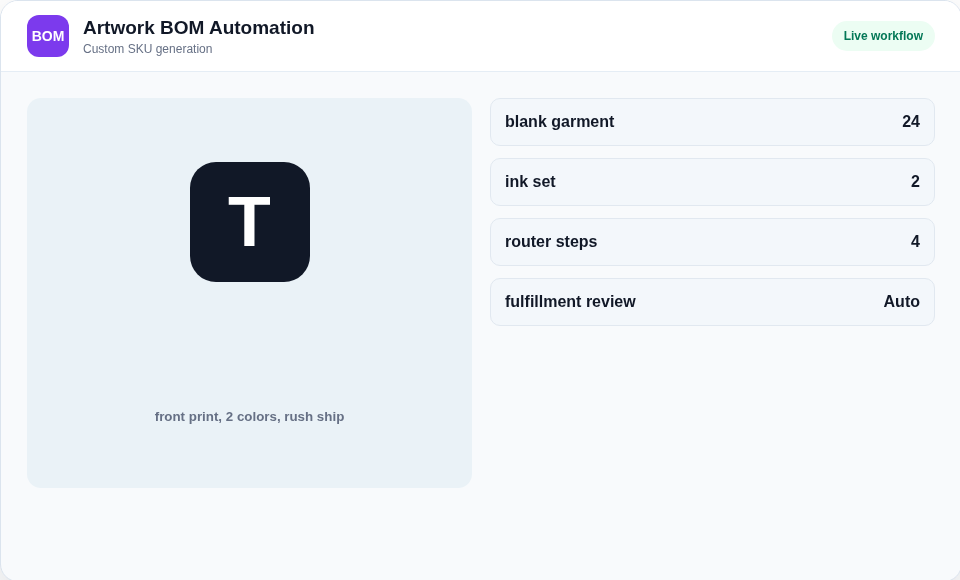
Translate customer selections into the right SKU, BOM, instructions, and production route.
Connect production events to inventory, shipping, accounting, partner systems, and equipment.
ONE OPERATIONAL RECORD
The work order is part of the same operation as purchasing, inventory, sales, fulfillment, and reporting.
Buy components against projected production needs and current availability.
Allocate, issue, consume, receive, and trace material through the build.
Release finished goods into the same order and shipping workflows.
Connect production status and history to the operational decisions around it.
START WITH THE WAY YOU BUILD
We’ll walk through materials, work orders, routing, approvals, and the production exceptions your team handles today.
Book a manufacturing demo